Roof Leak Repair in Seminole, FL
Start at the Stain, End at the Source.
Roof leak repair in Seminole is rarely a mystery once you know how the house was built. Most homes here were framed in the 1970s and 1980s, and their roofs give way in a few predictable spots. We find the opening that is letting water in, stop the active leak, and put the photos in your homeowner portal.
Takes about 30 seconds. A local roofing specialist follows up the same business day.
Seminole is a city of 1970s and 1980s houses. Census estimates for 2020 to 2024 count 3,058 homes built in the 1970s and 1,865 in the 1980s, and they put the city’s median year built at 1979. In ZIP 33772, which takes in much of the city and the unincorporated land around it, the median is 1973. Roofs on houses that age tend to leak from the same short list of places, so a roof leak repair in Seminole usually starts with a good guess about where to look.
Why Leaks Start Where They Do on Seminole Homes
A house built around 1979 has probably had its shingles replaced at least once. The parts around those shingles are another story. Pipe collars, wall flashing, chimney metal and the low roof over a back porch often get left in place or reused during a re-roof, so they can be a decade or two older than the surface you can see from the street.
The spots we check first:
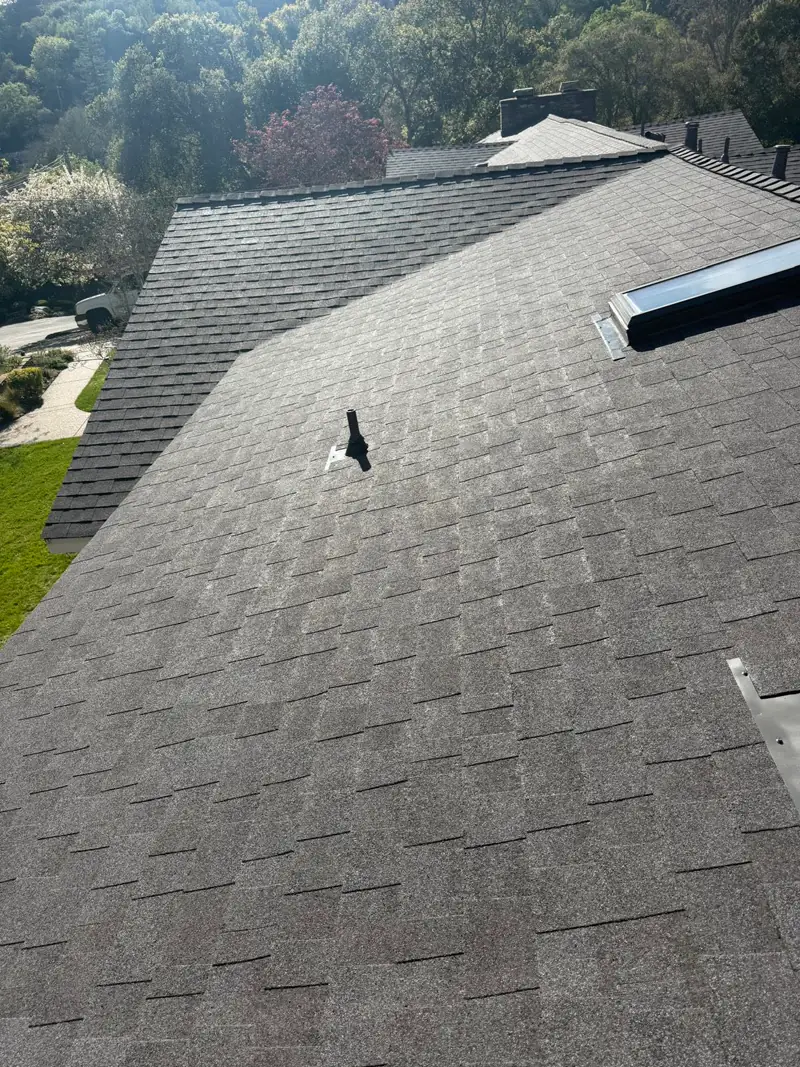
- Pipe collars around plumbing vents, which dry out and split in the sun.
- Flashing where the roof stops against a wall, a chimney or a taller section of the house.
- Valleys, the channels where two slopes meet and carry the heaviest flow.
- Exhaust caps and roof vents, where seals harden and fasteners work loose.
- Flat porch and Florida room roofs joined to the pitched roof of the house.
Now and then the culprit is something else: a skylight curb, a nail driven in the wrong place, or the bolt holes from a satellite dish mount that came down years ago.
- Pipe boots The rubber collar cracks in the sun
- Wall and chimney flashing Lifts or loses its sealant
- Valleys Two roof planes drain through one channel
- Lifted shingles Storm gusts break the seal strip
- Skylights and vents Seals age out around the edges
- Flat-to-pitched seams Where a porch or addition ties in
Rubber Collars Around Pipes and Exhaust Vents
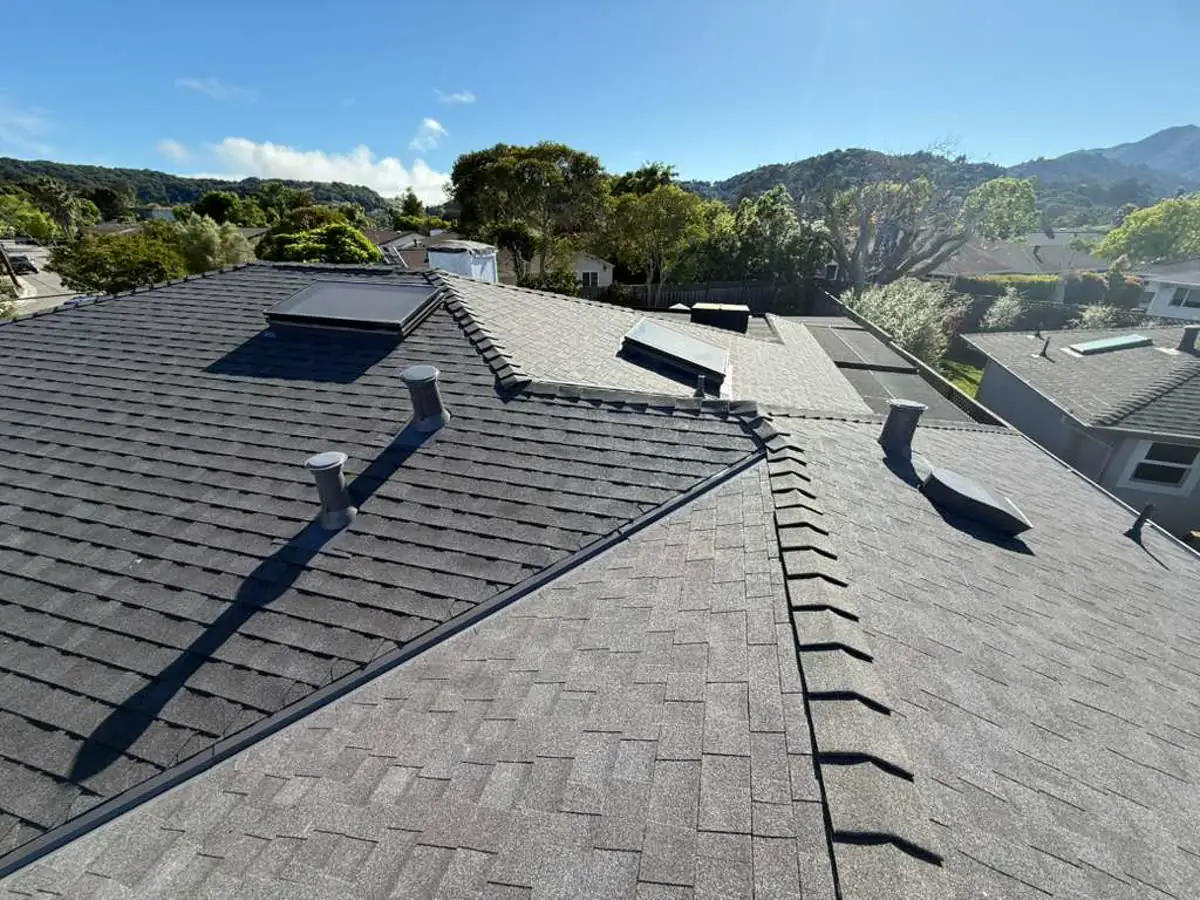
Every drain in the kitchen and bathrooms ties into a vent pipe that exits through the roof. Where the pipe passes through, a boot seals the gap. It is a flat metal base with a rubber collar that grips the pipe. Seminole sun bakes that rubber year after year until it cracks, and from then on rain follows the pipe down into the attic.
These leaks tend to show up as a small, round stain near a bathroom or hallway. They are also among the simplest to fix. We lift the shingles above the boot, slide a new one in so it laps under the course above and over the course below, and seal the fasteners.
Exhaust caps, box vents and turbine vents fail for similar reasons. Their seals stiffen, nails back out, and wind-driven rain works under the edges. We check every one on the slope above the stain, not just the closest.
Metal at Walls, Chimneys and Valleys
Flashing is the bent sheet metal that sends water back onto the roof anywhere the roof runs into something solid. On Seminole houses that is often a block or stucco wall where an addition meets the original home, a second-story section rising above a one-story roof, or a chimney.
Here is how those details let go:
- Step flashing along a sidewall rusts out, or was never woven in with each shingle course.
- Counterflashing pulls away from block or stucco, and water slips in behind it.
- Chimney flashing gets buried under so many layers of roof cement that the real gap is hidden.
- Valleys wear out ahead of the rest of the roof because two slopes drain through them.
Water that gets past flashing seldom drops straight down. It lands on the deck, rides a rafter or the slope, and comes through the ceiling well away from where it got in. That is why a patch right above the stain so often fails.
Florida Rooms and Flat Porch Roofs
Plenty of older Seminole homes have a section with almost no pitch: a screened porch that was enclosed, a Florida room, or a carport turned into living space. Many were added after the house was built, with a low roof tucked under the main eave or butted against it.
The trouble is the seam. All the runoff from the slope above pours onto the low roof right at that joint. If the flashing there was done poorly, or has simply worn out, water goes into the wall or the ceiling below. The flat section has problems of its own. Water sits where the deck has sagged, seams open on aging roll roofing, and shingles laid on too low a pitch let rain blow under them.
Sometimes a new tie-in and fresh flashing solve it. Other times the low roof is finished and needs a real low-slope system. Our flat roofing page covers that work.
- The tie-in Where the flat section meets the main roof, the classic leak point
- Ponding water Low spots hold water after a storm and wear the membrane out early
- The edge and drain Water has to reach the gutter or drain, or it backs up
Tracing a Leak From the Stain to the Opening
Before anyone visits, we measure the roof from high-resolution imagery. That gives us the slopes, valleys, pipes and tie-ins ahead of time. At the house we start where the water shows, at the ceiling, and go up into the attic. Dark trails on the underside of the deck show which way the water ran.
From there we climb onto the roof and work uphill from that spot, checking each possible opening on the way. When we find the one, we photograph it before we touch it. You see what we saw.
Your notes help. A leak that shows up in every rain, one that appears only in heavy storms, and one that needs wind from a certain side each point to different causes. And sometimes the roof is fine. A clogged AC drain line or condensation in a stuffy attic can wet a ceiling on a dry day. If that is the cause, you get the photos and you don’t pay for a roof repair you don’t need.
What We Look at, in Order
- The ceiling stainHow big it is, its shape, and whether it spreads only after rain
- The atticWater trails on the deck boards and rafters point uphill to the source
- The slope aboveEach pipe, vent, wall joint, valley and tie-in in the water's path
- Your timingEvery shower, only big storms, or only when wind comes from one side
- Other suspectsAn AC drain line or a damp, poorly vented attic can stain a ceiling too
Seminole’s Wet Months
A typical year in Seminole brings about 51 inches of rain, based on ERA5 model data for the city from 2016 through 2025. Roughly 29 of those inches fall from June through September, and August is the wettest month at close to 9 inches. That stretch is when most leaks appear. Storms build in the afternoon day after day, and a small opening never gets a chance to dry out.
Big storms reach weak spots that ordinary rain misses. During Hurricane Milton in October 2024, a volunteer CoCoRaHS gauge just outside Seminole city limits caught 13.76 inches, according to the National Hurricane Center’s report on the storm. Gutters and valleys can’t move water that fast, so it backs up under shingle edges and at wall joints.
If a storm left you with more than one leak, or tore off shingles or metal, see our storm damage roof repair page.
See the numbers
| Month | Avg high | Avg rain | Strongest gust |
|---|---|---|---|
| Jan | 67°F | 2.8 in. | 61 mph (Jan 17, 2016) |
| Feb | 72°F | 2.1 in. | 56 mph (Feb 6, 2020) |
| Mar | 75.1°F | 1.9 in. | 52 mph (Mar 22, 2024) |
| Apr | 79.5°F | 2.7 in. | 52 mph (Apr 30, 2023) |
| May | 84.2°F | 3.8 in. | 50 mph (May 24, 2017) |
| Jun | 86.1°F | 6.3 in. | 47 mph (Jun 6, 2016) |
| Jul | 87.6°F | 7 in. | 51 mph (Jul 6, 2021) |
| Aug | 87.3°F | 8.9 in. | 65 mph (Aug 4, 2024) |
| Sep | 86°F | 6.9 in. | 89 mph (Helene) |
| Oct | 82.9°F | 3.3 in. | 103 mph (Milton) |
| Nov | 76.3°F | 2 in. | 65 mph (Nov 11, 2020) |
| Dec | 71.3°F | 3.2 in. | 53 mph (Dec 21, 2018) |
Source: Open-Meteo historical weather (ERA5 reanalysis), daily data for Seminole 2016–2025.
Who Permits a Roof Leak Repair in Seminole
The answer depends on the parcel, not the mailing address. The City of Seminole covers about a quarter of the land in its four ZIP codes, so most homes with a Seminole address sit in unincorporated Pinellas County. The city gives a simple test: search the property on pcpao.gov and read the tax district code. SM means the city. STF or SRT means the county.
Inside city limits, the City of Seminole Building Division at 9199 113th Street handles roof permits through its Citizenserve portal. Inspections called in by 2 pm get a next-day slot, and on a home one inspector covers every trade. Outside city limits, Pinellas County Building & Development Review Services in Clearwater does the permitting, and county re-roofs go through its Express permit process.
Not every small leak repair needs a permit. We confirm with the right office before we start, and when one is needed we pull it in our name and book the inspections. We hold Florida certified roofing contractor license CCC1336568 and carry liability and workers’ comp coverage. Nearby, we also work in Bardmoor and Ridgecrest.
Leak Repair Permits for a Seminole Address
- City parcels
- City of Seminole Building Division, 9199 113th Street, through the Citizenserve portal
- County parcels
- Pinellas County Building & Development Review Services, 440 Court St., Clearwater
- City inspections
- Called in by 2 pm for a next-day inspection; one inspector handles every trade on a home
- Permit holder
- Roof Copilot, in our name, with a copy in your portal
Signs the Leak Is Really a Roof Problem
One leak on a healthy roof is a repair, and we quote it as one. Some leaks, though, are the roof telling you it is worn out. Look for:
- Leaks on more than one slope, or a new one every summer
- Shingles that crack or crumble when you bend them
- Soft or stained decking in several spots, not only around one opening
- Piles of granules in the gutters or at the downspouts
The Florida Building Code draws its own line. When repairs in any 12-month period go beyond 25% of a roof or a roof section, that whole roof or section has to be brought up to current code. State law carves out an exception: if the existing roof went on under the 2007 Florida Building Code or later, only the repaired area needs to meet current code. With a 1979 median build year, most Seminole homes started out long before 2007, so what matters is when the current roof was installed. Permit records can often tell you.
When it is time for a new roof, you get Good, Better and Best roof replacement options, each a matched system from one manufacturer that we buy direct. Our 15-year workmanship warranty is in writing and adds to the manufacturer’s coverage. Sign from your phone, the price stays locked once we send it, and monthly payment options are available. Near the VA, see roof replacement in Bay Pines. For a one-story ranch house, our shingle roofing page compares the choices.
Repair or Full Code Upgrade?
Your Photo Record of the Repair
Most of a leak repair happens where you can’t see it: under shingles, behind flashing, on the deck itself. So we photograph each step. You get the opening as we found it, the damaged layers once they are exposed, and the finished repair from the roof and from the attic.
Those photos sit in your homeowner portal along with the schedule, the permit, your documents and our messages. If a storm caused the leak, the same pictures make a documented photo report you can pass to your insurer if you choose to file. The claim stays between you and your insurance company.
For other trouble on the roof, see roof repair. To have the whole roof looked over before the next rainy season, see roof inspection.

Our Roof Leak Repair Process in Seminole
- 01
Send Us Your Address
We measure the roof from imagery before we come out.
- 02
We Find the Opening
A free inspection of the stain, the attic and the roof, with a photo of where water gets in.
- 03
You Approve from Your Phone
No pushy sales visit, and the price is set when we send it.
- 04
We Stop the Leak
Permit pulled in our name when one is required, and cleanup included.
- 05
You Keep the Proof
Before and after photos go straight to your portal.
Roofs We're Proud Of
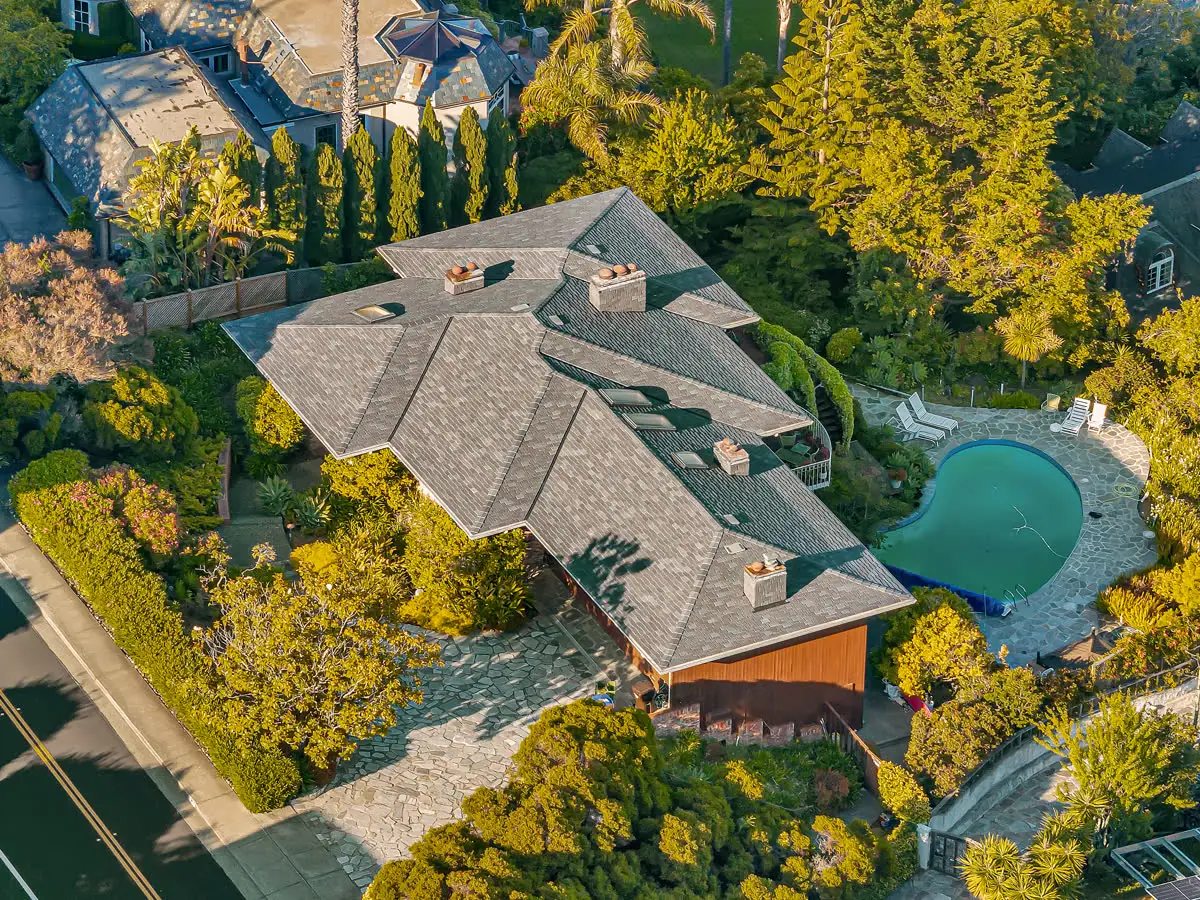
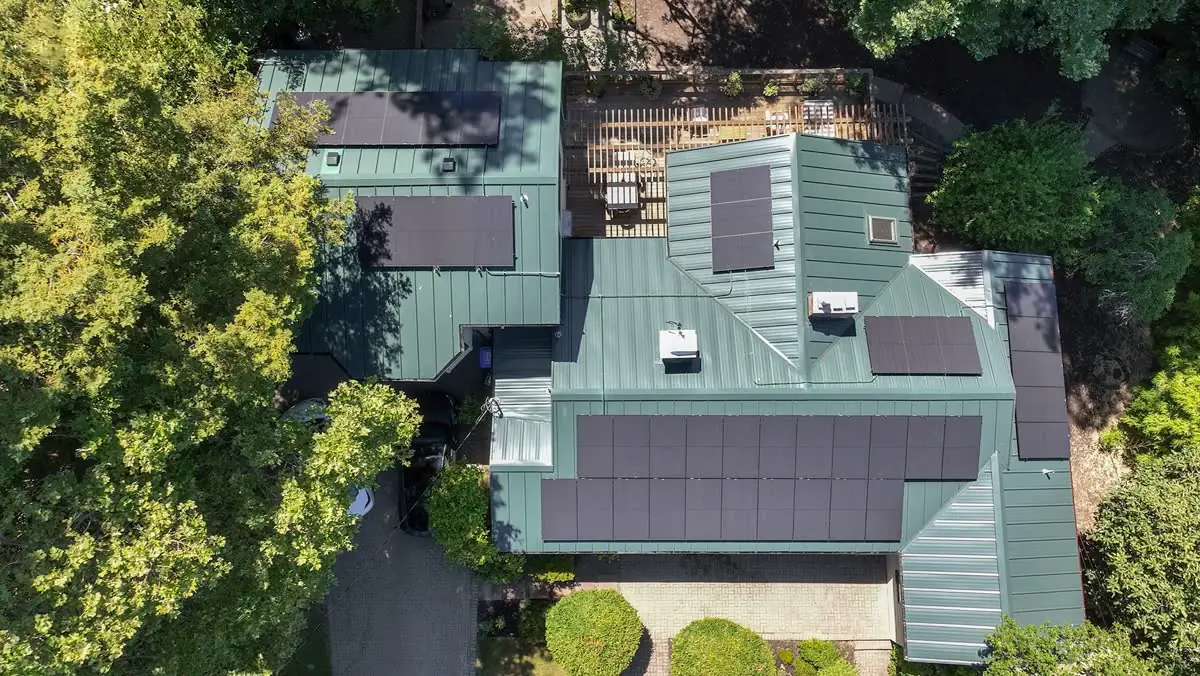
Year workmanship warranty in writing, and it is added to the warranty the manufacturer gives on the materials.
We pull the permit in our name, and the roof is built to meet Florida code. You won't have a form to fill out.
We haul the torn-off roof away, and a magnet passes over the yard and driveway to pick up stray nails.
Florida certified roofing contractor CCC1336568. Our policies include general liability and workers' comp.
Spread the cost into monthly payments so the roof doesn't have to wait.
Seminole Roof Leak Questions
The Stain Is in the Hallway but There Is Nothing on the Roof Above It. Where Is the Water Coming From?
Almost always from somewhere uphill. Water that gets in at a pipe or a wall joint runs along the roof deck or a rafter before it drops, so the stain can sit several feet from the opening. We follow the trail in the attic back to where it starts.
My Ceiling Gets Wet Only When a Storm Comes in Off the Gulf. Why Not in Every Rain?
Some openings only take water when rain hits them sideways. A loose piece of flashing on a west-facing wall can stay dry in a straight-down shower and leak every time wind pushes rain against it. Telling us which storms cause the drip helps us find it faster.
Can You Just Put Roofing Cement Over the Spot?
Cement on the wrong spot does nothing, and cement on the right spot usually cracks again after a summer or two of sun. We replace the part that failed, such as the pipe collar or a run of flashing, so the repair lasts.
My Mailing Address Says Seminole. Does the City Permit the Repair?
Only if the parcel is inside city limits, and most homes with a Seminole address are not. Look the property up on pcpao.gov and check the tax district code. SM is the city; STF or SRT is Pinellas County. We check it ourselves before we quote.
Will You Tell Me If I Really Need a New Roof?
Yes. We stop the active leak first and then tell you plainly whether the roof has life left. If it is near the end, you get Good, Better and Best replacement options to review whenever you like.
The Leak Started After a Hurricane. What Should I Give My Insurer?
We give you a documented photo report showing the damage and the repair. You can share it with your insurance company if you decide to file. The claim itself stays between you and your insurer.

Get Your Seminole Roof Measured, Free.
Enter your address. We'll handle everything else.