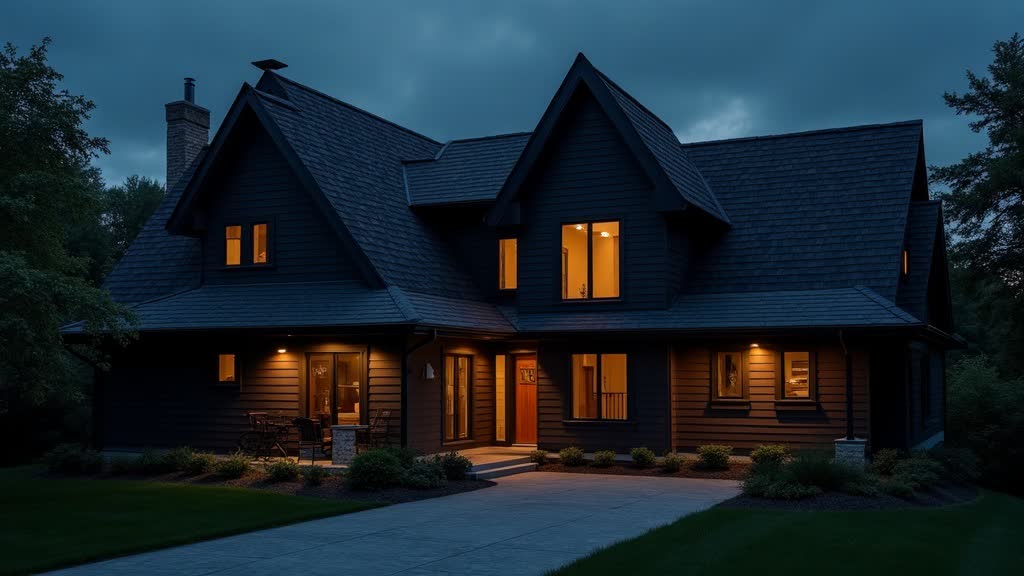
Flat Roof Repair in Seminole, FL:
Give the Water Somewhere to Go.
Flat roof repair in Seminole for the low roofs most people forget about until the ceiling stains, from a 1970s carport to the roof over a storefront on Park Boulevard. We trace where water collects and where it gets in, then show you whether the answer is a repair, a re-cover or a new roof.
Takes about 30 seconds. A local roofing specialist follows up the same business day.
A lot of Seminole roofs are barely sloped at all. On houses they hide over the carport, the screened porch that got walls, or the Florida room off the kitchen. On the commercial strips, the whole roof is flat. Each one works fine as long as rain can leave it, and almost every flat roof repair we do in Seminole starts with finding out why some of the rain isn’t leaving.
Low Roofs Tacked Onto Seminole Houses
Seminole is a 1970s town at heart. Census estimates for 2020 to 2024 put the city’s median year built at 1979, with 28% of homes from that decade alone and about six in ten built between 1960 and 1989. Houses of that age have usually been added to. A carport gets a roof, a porch gets enclosed, a back room goes on where the patio was.
The builder of an addition had to tuck its roof under the existing eave, which left very little room for pitch. Forty years later, that low roof may be on its second or third surface, and nobody kept the paperwork. The weak point is nearly always where it meets the house. Rain comes off the main roof and lands right on the joint, and the flashing there has to hold through every wet summer. When it gives, water slips behind the fascia, runs inside the wall and shows up as a ceiling stain a few feet away from the real entry point.
So we look at the whole picture on the inspection: the joint, the edge metal, the deck slope, and the condition of the pitched roof above. A joint repair only holds if both roofs on either side of it are sound. If the main roof needs attention too, see roof repair or roof replacement.
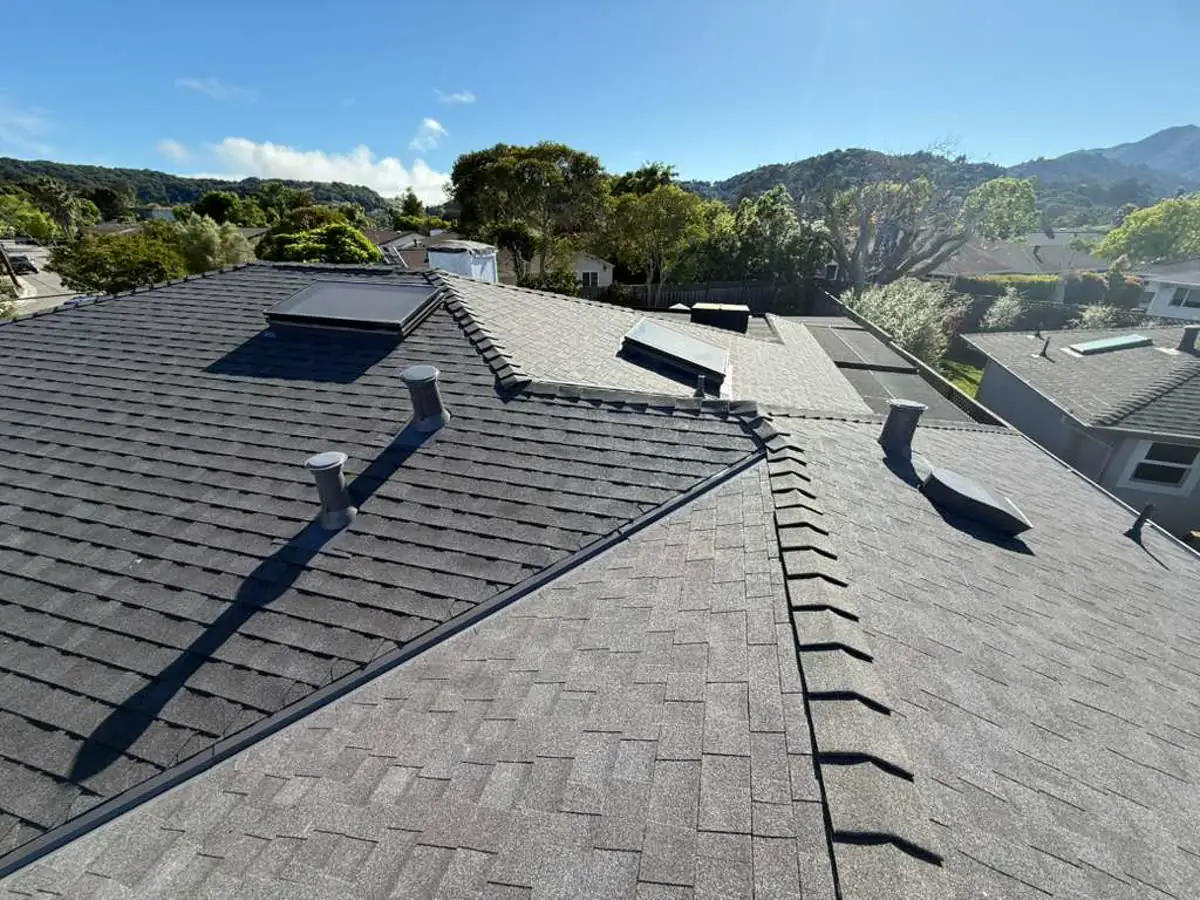
Condo and Townhome Roofs in Seminole
Seminole has more condo living than most people expect. About one in four homes inside city limits is in a building of 20 or more units, and only about four in ten are detached houses. The city’s own history names the Woodbridge and Timberwoods condominiums and the Townhomes of Lake Seminole among the areas it annexed between 2000 and 2003.
Larger buildings like these often carry low-slope roofs, or flat sections over stairwells, walkways and mechanical areas. In most associations the roof is a common element, so the board, not the unit owner, hires the roofer and signs the contract. If you sit on a board, we can inspect the roof, map every section from imagery, and hand you a photo set that shows the condition of each area before anyone votes on a budget. Unit owners with a leak should go to the association first.
Seminole Housing, by Building Type
- Detached houses
- About 4 in 10 city homes
- Buildings of 20+ units
- About 1 in 4 city homes (2,666 units)
- Named city condo areas
- Woodbridge and Timberwoods condominiums, Townhomes of Lake Seminole
- Who decides on the roof
- Usually the association, so start with your condo documents
Storefronts on Seminole Blvd, Park Blvd and 113th St
Pinellas County Economic Development describes Park and Seminole Boulevards as offering “prime retail and mixed-use sites.” Most of those buildings have flat or low-slope roofs. Along Seminole Blvd, every address we checked from the 5600 block to the 9700 block is inside city limits; farther north the corridor turns unincorporated and then Largo. On Park Blvd, the addresses we checked from Lake Seminole Park (10015) to Seminole City Center (11201) are in the city, while 13100 Park Blvd is not.
Seminole City Center itself replaced the old Seminole Mall, which opened its first phase in 1965 and sat empty for about a decade before demolition began in 2015. The city held the grand opening for the new center in November 2017. Up the road on 113th Street N, City Hall, the joint college and city library, and the Recreation Center sit side by side, all inside city limits.
Commercial flat roofs bring their own parts: parapet walls, interior drains, scuppers, rooftop units on curbs, and decades of conduit cut through the deck. We repair and replace low-slope roofs on Seminole retail, office and small commercial buildings. One city rule to know: commercial projects inside Seminole use a private provider for plan review and inspections. Larger jobs are covered on our commercial roofing page.
Low-Slope Buildings We Work on in Seminole
- Seminole Blvd
- Shops and offices along the corridor, inside city limits from the 5600 to 9700 blocks checked
- Park Blvd
- Shopping and dining at Seminole City Center and along the corridor
- 113th St N
- The civic stretch by City Hall, the library and the Recreation Center
- Bigger buildings
- See our commercial roofing page
Standing Water After a Summer Storm
Ten years of ERA5 weather model data put Seminole at about 51 inches of rain a year. Roughly 29 inches of that falls from June through September, and August is the wettest month at close to 9 inches. Summer rain here tends to come all at once, in a short, heavy burst late in the day.
A sloped roof sheds that in minutes. A flat one has to move water sideways to an edge, a scupper or a drain, and any dip in the deck keeps some of it. A fair test: if the water is still there about 48 hours after the rain stops, the roof isn’t draining. In a Seminole August the next storm usually arrives first, so a low spot can stay wet all season.
That puddle costs more than it looks. It ages the membrane beneath it, keeps pressure on the nearest seams and loads the deck with weight. A deck that sags a bit holds a bit more water the next year, and the cycle feeds itself. The lasting fix is slope: build up the low spots, add tapered insulation toward the drains, or add or enlarge a scupper where the building allows it.
- The tie-in Where the flat section meets the main roof, the classic leak point
- Ponding water Low spots hold water after a storm and wear the membrane out early
- The edge and drain Water has to reach the gutter or drain, or it backs up
Where Water Gets In on a Low-Slope Roof
The open middle of a flat roof is rarely the first thing to fail. Leaks start where the membrane ends, bends or has been cut. On Seminole homes and commercial buildings we check these first:
- The wall line. Where an addition roof meets the house, or a commercial roof meets a parapet, the flashing has to turn up the wall and stay bonded.
- Drains and scuppers. Oak leaves and debris back water up a drain. A scupper sized for a light shower overflows in a downpour.
- Penetrations. Each vent stack, conduit and equipment curb is a hole with its own flashing.
- Edge metal. Drip edge and gutters move with the heat, and the seal behind them cracks.
- Laps under water. Seams that sit in a puddle are the first seams to let go.
Hurricane Milton put that list to the test. A CoCoRaHS gauge in Seminole caught 13.76 inches of rain during the storm. On a flat roof, water like that rises faster than the outlets can clear it and finds any flashing that was set too low. For damage across the whole house, see storm damage roof repair; for leaks elsewhere, roof leak repair. If water is coming through right now, we stop the active leak first and plan the permanent repair after.
Seminole Flat Roof Repair, Re-Cover or Full Replacement
A leaking flat roof does not always have to come off. What we find below the surface decides the path.
Repair suits a roof that is dry underneath and has one clear fault: an open lap, a loose drain flashing, a split at the wall. We fix that spot and price it as a repair.
Re-cover puts a new roof surface over the old one. It can work when the top is worn out but the insulation is dry, the deck is firm, and the code allows another layer. You skip the tear-off, but only if everything staying behind is sound.
Replacement strips the roof to the deck. It is the honest answer when we find soaked insulation, a spongy or sagging deck, blisters across the field, several leak points or water that never drains away. Rotten deck boards come out, slope gets built in, and the new system goes on a clean, dry base.
We sort these out by probing soft areas, taking moisture readings and, where needed, cutting a small core to see each layer. You get the photos whatever the answer. If a porch roof and the main roof are both near the end, doing them together keeps it to one permit, one schedule and one crew responsible for the joint.
Which Fix Fits the Roof
- RepairDry layers below, and one clear fault such as an open lap or a lifted drain flashing
- Re-coverTired surface over dry insulation and a firm deck, and code allows one more layer
- ReplaceSoaked insulation, spongy deck, many leak points or water that never drains off
The 25% Rule on an Older Flat Section
Florida limits how much of an older roof can be patched. Section 706.1.1 of the Florida Building Code’s existing building volume caps repair, replacement or recovering at 25% of a roof or roof section in any 12 months. Past that, the whole roof or section must meet the current code. A carport or porch roof is often a small section of its own, so one big repair can cross the line.
State law, F.S. 553.844, carves out an exception: if the roof now in place went on under the 2007 Florida Building Code or later, only the part being repaired has to meet current code. With a city median build year of 1979, most Seminole houses predate the 2002 code, so what matters is when the current roof went on and to which edition. We pull the permit history before we price the job.
Repair Limit on an Older Roof Section
Permits: Who Signs Off on a Seminole Flat Roof
Most homes and buildings with a Seminole mailing address are not in the City of Seminole. The four Seminole ZIP codes cover about 18 square miles, and only about a quarter of that land is inside city limits. To check yours, look up the parcel on pcpao.gov. The city’s own instructions say a tax district code of SM means the City of Seminole, and STF or SRT means unincorporated Pinellas County.
Inside the city, the Building Division at 9199 113th Street handles the permit through its Citizenserve portal. The office is open 8 am to 3:30 pm, and inspections called in by 2 pm get a next-day slot. On a re-roof the city tells crews not to stop and wait if the inspector runs late; the inspector can ask for photos of sections that are being finished that day. Outside the city, Pinellas County Building & Development Review Services issues the permit; the county files flat reroofs as an Express permit and requires an in-progress inspection on every one. Whichever office it is, we confirm it, pull the permit in our name and post a copy to your portal.
Who Permits a Seminole Flat Roof
- City of Seminole
- Building Division, 9199 113th St, 727-391-0204, applications through Citizenserve
- Unincorporated county
- Pinellas County Building & Development Review Services, (727) 464-3888
- Commercial jobs in the city
- Plan review and inspections go through a private provider
- Who files
- We pull the permit in our name
Flood Zones and Seminole’s 50% Flood Rule
According to the city, about 11% of properties inside Seminole sit in the 100-year floodplain, with flooding coming from Long Bayou, Cross Bayou and Lake Seminole and the ditches that feed them. For buildings in the city, the substantial improvement line is 50% of the building’s market value, land excluded. Reach it, and the building has to meet current flood standards. The city code measures each project on its own, with no look-back period.
Unincorporated Seminole addresses follow Pinellas County’s rule instead: 49% of the building’s market value. County pages still describe a one-year look-back, but a 2025 Florida law bars local flood ordinances from adding up repairs over a time period, so we ask the permit office how earlier work on the building is treated. Two buildings on the same street can fall under different rules. The city’s review form lists roof decking and roofing among the costs it counts. A flat roof alone rarely gets close, but when a building needs other work too, we raise the question before you sign. For flood zone and elevation certificate questions, the city’s Community Development office is at 727-391-0204 ext. 129.
City of Seminole Substantial Improvement Line
Membrane Systems and What Goes Under Them
Every flat roof we build is a continuous membrane: sheets joined into one waterproof surface, with flashings carried up walls, curbs and parapets and tied into the edge metal. On houses that usually means a porch, carport or addition roof with a clean joint at the main roof. On commercial buildings we install TPO, modified bitumen and other low-slope systems.
We don’t steer every roof toward one membrane. The choice depends on foot traffic, rooftop equipment, drainage and how the roof meets its walls and any pitched roof next to it. Your quote names the system and gives the reason. It is always a matched system from one manufacturer, bought direct, so the membrane, flashings and accessories are built to work together.
What sits under the membrane matters just as much. The deck has to be dry and solid, insulation or a cover board goes in where the system calls for it, and tapered pieces add slope where water would otherwise pool.
Our Warranty, Measurements and Portal
Each new flat roof comes with our 15-year workmanship warranty in writing, and that sits on top of the manufacturer’s warranty for the system.
Before anyone visits, we measure every flat and pitched section of the property from high-resolution imagery. The inspection is free and comes without a sales pitch at the kitchen table. You compare Good, Better and Best options and sign from your phone, and the price is locked once we send it. Monthly payment options are available.
Flat roofs are built in layers that each disappear under the next, so we photograph the deck, insulation, seams and flashings as they go down. Those photos live in your homeowner portal beside the schedule, permit, documents and messages. After a storm, you also get a documented photo report of the damage to pass along to your insurer if you choose. Any claim is yours to handle with them directly. Cleanup is part of the job. If you want the whole house checked, book a roof inspection. We also work in nearby Bardmoor, Ridgecrest and Bay Pines.
Flat Roof Repair in Seminole, Start to Finish
- 01
Send the Address
We measure each section from high-resolution imagery before the visit.
- 02
Free Inspection
Drains, seams, edges, the wall joint and the deck all get checked and photographed.
- 03
Choose and Sign
A repair quote, or Good, Better and Best options for a re-cover or replacement, signed on your phone.
- 04
The Work
Permit pulled in our name with the city or the county, slope corrected where needed, cleanup included.
- 05
Your Records
Layer photos stay in your portal. Any new roof is backed by our written 15-year workmanship warranty.
We hold Florida certified roofing contractor license CCC1336568 and carry liability and workers’ comp coverage on every Seminole job.
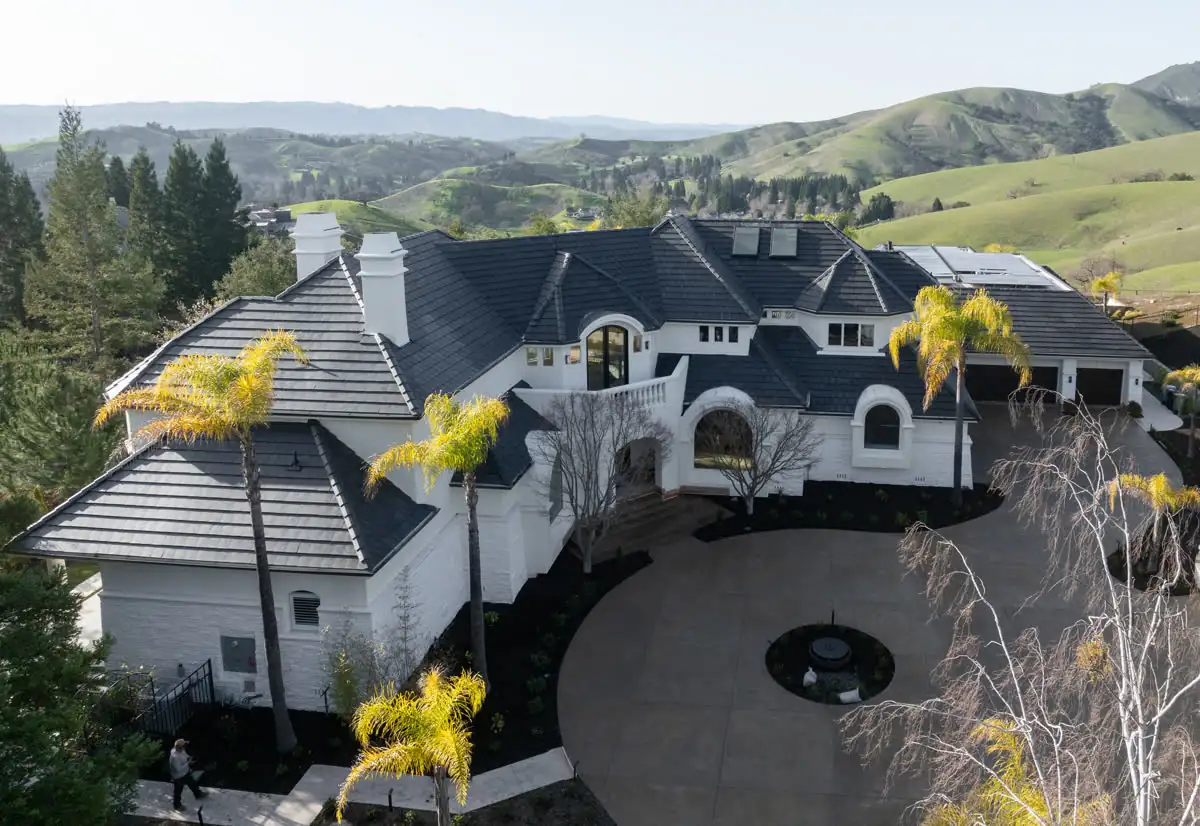
Roofs We're Proud Of
Year workmanship warranty in writing, and it is added to the warranty the manufacturer gives on the materials.
We pull the permit in our name, and the roof is built to meet Florida code. You won't have a form to fill out.
We haul the torn-off roof away, and a magnet passes over the yard and driveway to pick up stray nails.
Florida certified roofing contractor CCC1336568. Our policies include general liability and workers' comp.
Spread the cost into monthly payments so the roof doesn't have to wait.
Flat Roof Questions from Seminole Owners
Water Sits on Our Florida Room Roof After Every Afternoon Storm. Should We Worry?
If it is gone by the next morning, probably not. If the same puddle is still there two days later, the deck has a low spot or the outlet is too small or blocked. That patch of membrane wears out faster than the rest, so we check the slope and the drainage path, not only the surface.
Our Carport Roof Leaks but the Main Shingle Roof Is Fine. Can You Fix Just the Carport?
Usually. When the leak is in the carport's own surface or edge and the joint at the house is tight, we repair that section by itself. When the leak is at the joint, we open the flashing where the two roofs meet, since that is where most of these leaks begin.
How Is a Re-Cover Different from Tearing the Roof Off?
A re-cover adds a new roof surface over the prepared old one. A tear-off removes everything down to the deck. We only offer a re-cover after moisture readings show the layers below are dry and the code allows another layer on that roof.
Do You Coat Flat Roofs?
No. We repair low-slope membranes and install new roof systems. A coating over wet insulation traps the water, so we always look at what is underneath first.
We Have a Shop on Seminole Boulevard. What Roof System Would You Install?
That depends on the building. On commercial roofs we install TPO, modified bitumen and other low-slope systems, chosen for foot traffic, rooftop units, drainage and how the roof meets its walls. The quote names the system and says why.
We Live in a Seminole Condo and the Roof Over Our Unit Leaks. Who Do We Call?
Start with your association. In most condo buildings the roof is a common element the association maintains. We can inspect and quote for the association, and the photos go to whoever the association names.
Our Mail Says Seminole. Does the City Issue the Roof Permit?
Only if the parcel is inside city limits, and most Seminole mailing addresses are not. On pcpao.gov, tax district code SM means the city; STF or SRT means Pinellas County. We confirm it before filing either way.
Get Your Seminole Roof Measured, Free.
Enter your address. We'll handle everything else.